
Designing for college students struggling with food insecurity and don’t know where to start
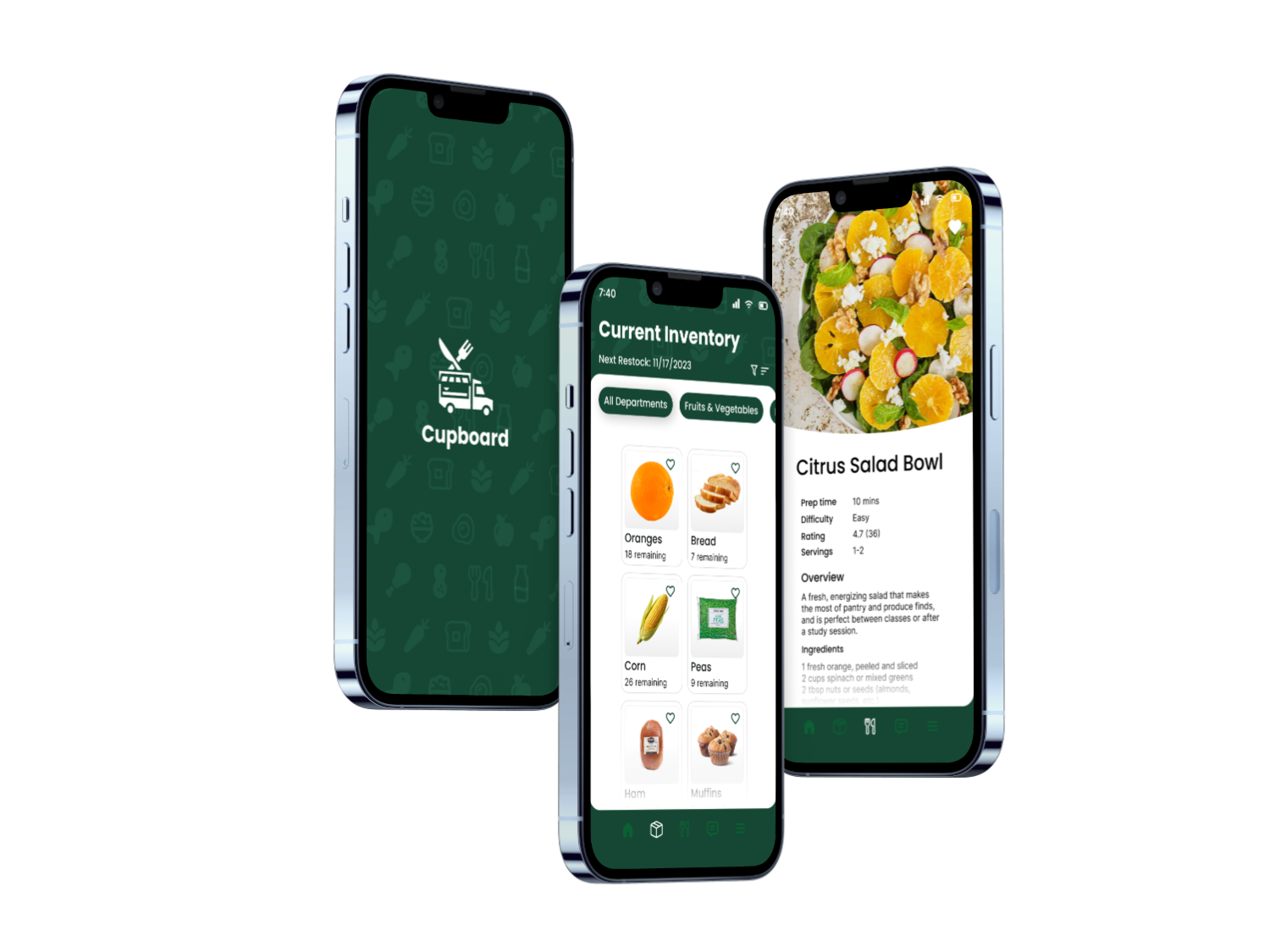
When basic needs become invisible
Food insecurity isn’t always visible, but it shapes how students move through their day, whether it's what they eat, how they focus, and whether they feel seem. This project rethinks how design can make support systems feel accessible without being flashy.
At UTD, many students balance classes, work, and finances, stretching their budgets to the point where food becomes an afterthought. Even when resources like the Comet Cupboard exist, students don’t always use them because they don’t need them, they don’t know how, or they feel hesitant to.
Why asking for help feels harder than it should
I thought about how something as necessary as food could feel complicated. Whether it's access, awareness, time, or the quiet hesitation that comes with asking for help, I wanted to design something that makes support feel normal. Not something you have to search for or second guess.
Listening to how students actually get through the week
-
I started by talking to students about how they actually get food during the week. I expected to hear about tight budgets, but what came up more often was confusion.
People weren’t relying on a single resource. They were checking different apps, asking friends, or just going with whatever was easiest in the moment. Some students had heard of the Comet Cupboard, but didn’t really know how it worked or what to expect. Others didn’t know it existed at all.
Even when support was available, it didn’t always feel accessible.
-
At first, I thought the problem was access.
But after hearing how students talked about it, I realized the bigger issue was uncertainty. Not knowing where to go, what they would find, or whether it was even meant for them made something simple feel complicated.
There was also a hesitation that didn’t show up in statistics. Students didn’t always feel comfortable using these resources, even when they needed them.
That shift changed how I approached the project. It wasn’t just about making resources available. It was about making them feel visible and usable.
-
Instead of starting with features, I focused on how students move through their day.
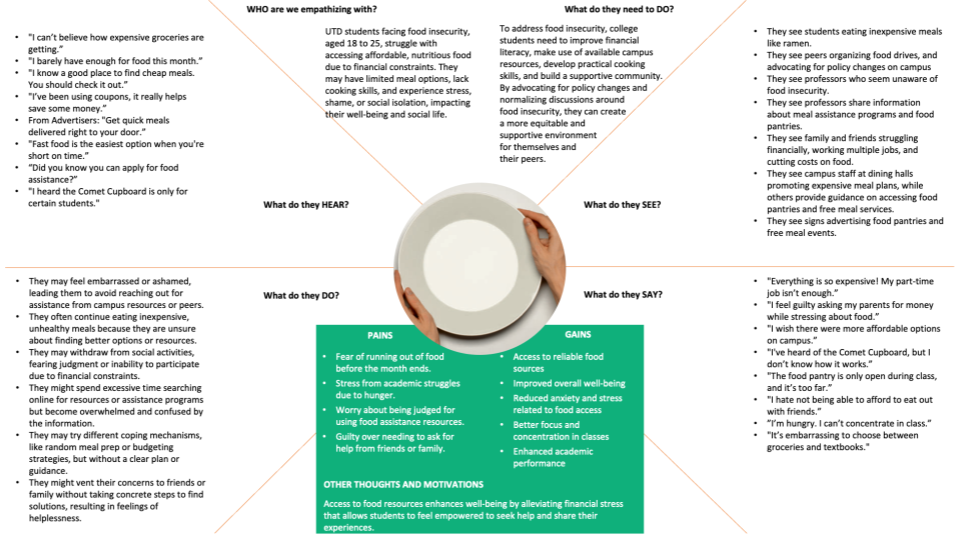
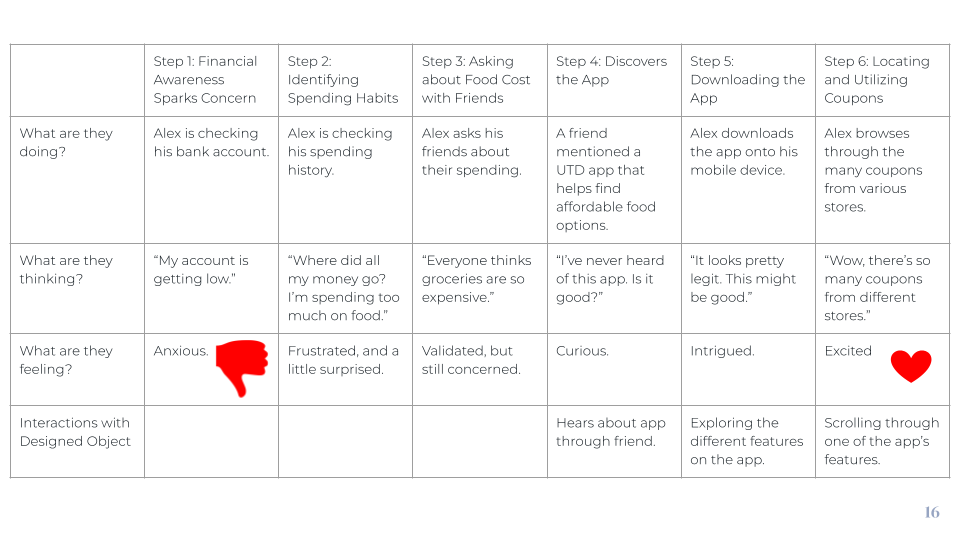
I mapped out moments where decisions around food happen—between classes, after work, late at night. These decisions were quick and often based on convenience, not planning.
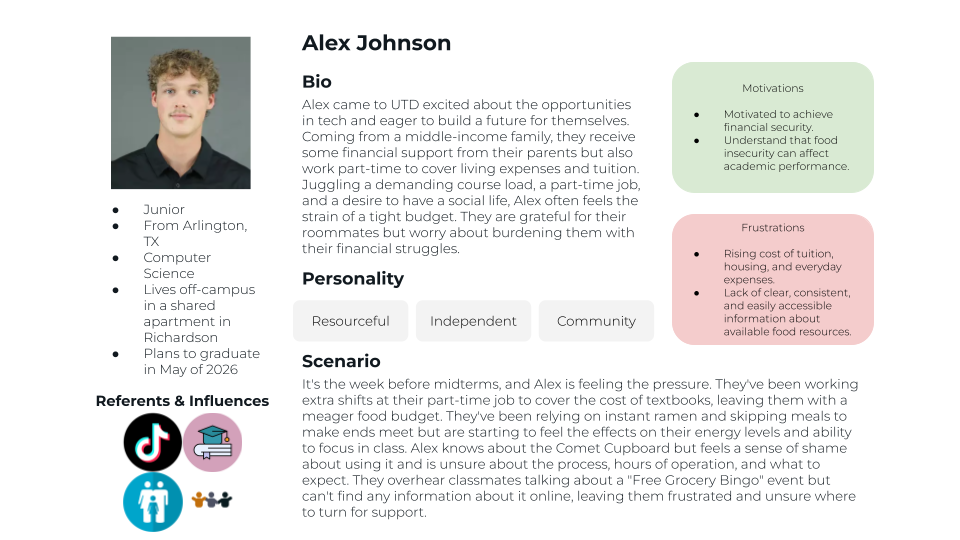
I also built a persona based on these patterns to better understand the emotional side of the experience. It helped me think beyond logistics and consider how stress, time, and uncertainty shape behavior.
This made it clear that any solution needed to fit into existing habits, not add more effort.
-
Early on, I considered focusing only on improving access to the Comet Cupboard itself.
But that felt too narrow. The issue wasn’t just one resource—it was how fragmented everything felt.
So I shifted toward a more connected system. Instead of designing a single feature, I started thinking about how to bring information, tools, and support into one place.
Each decision came back to the same question:
How do you make something easier to use without making it feel overwhelming? -
Students don’t have time to search
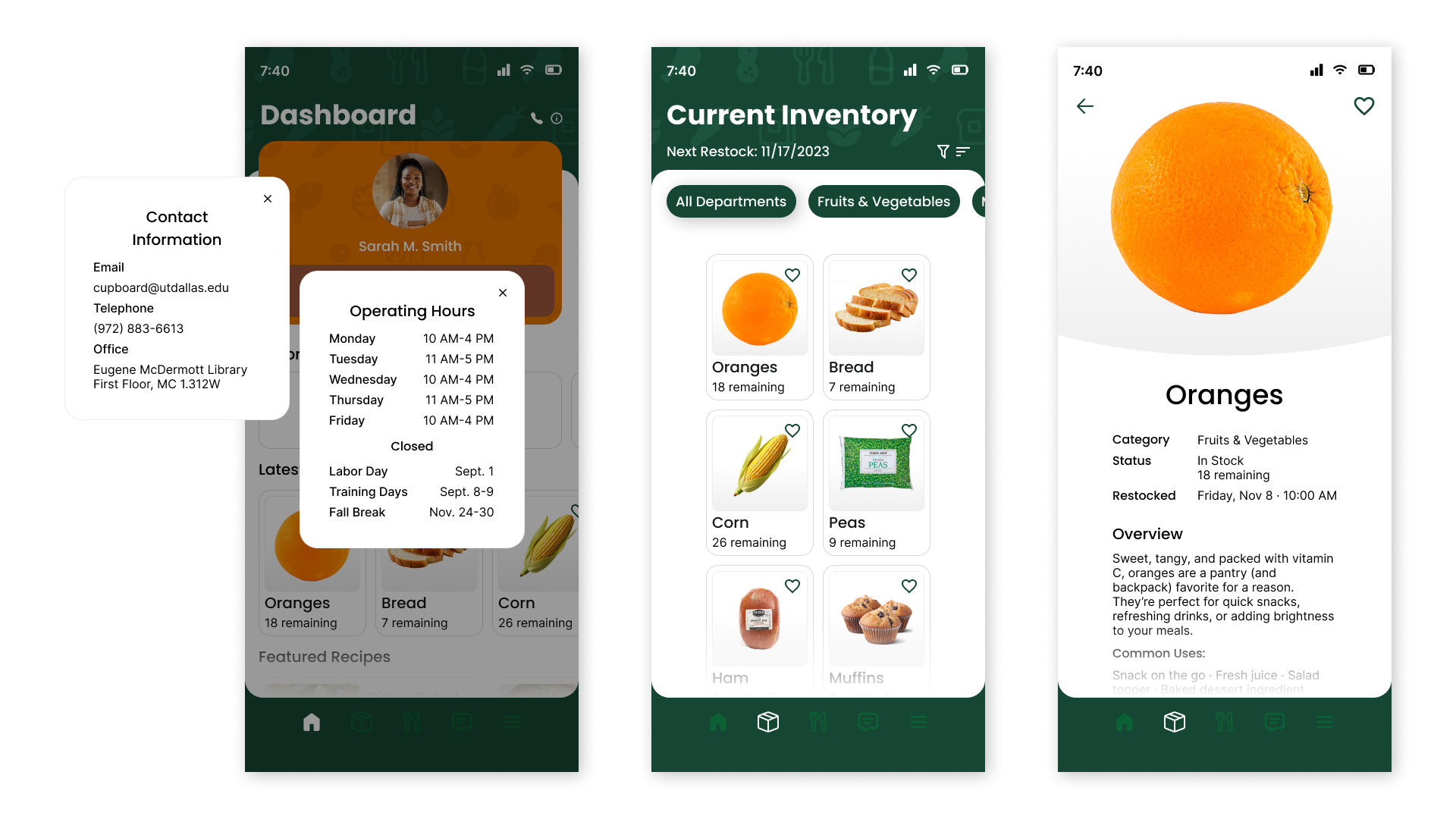
→ I focused on a centralized hub that surfaces relevant information quicklyStudents feel unsure about using resources
→ I designed for clarity and transparency to reduce hesitationFood decisions happen in the moment
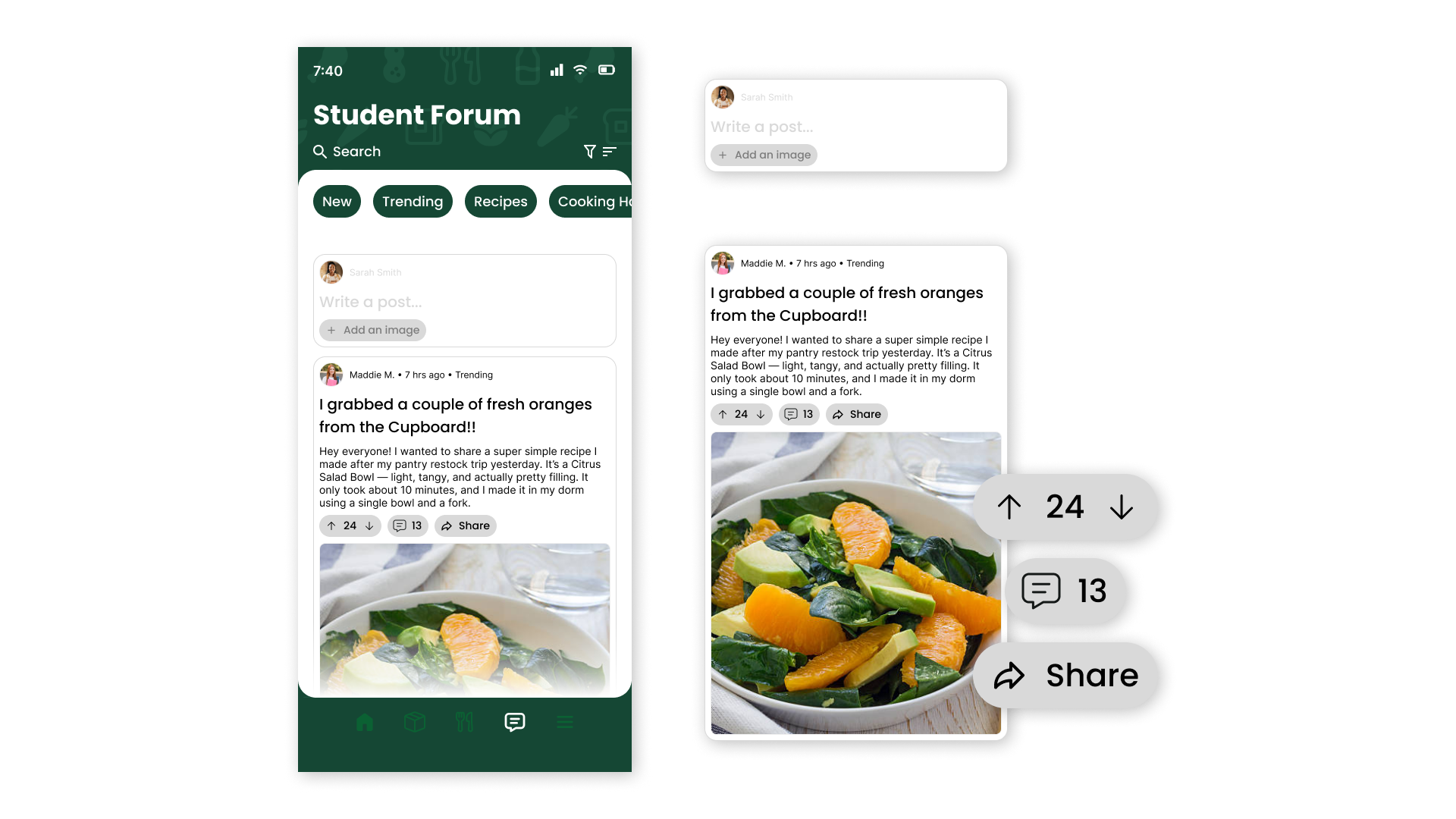
→ I prioritized quick, actionable tools like coupons and price comparisonsStudents rely on each other
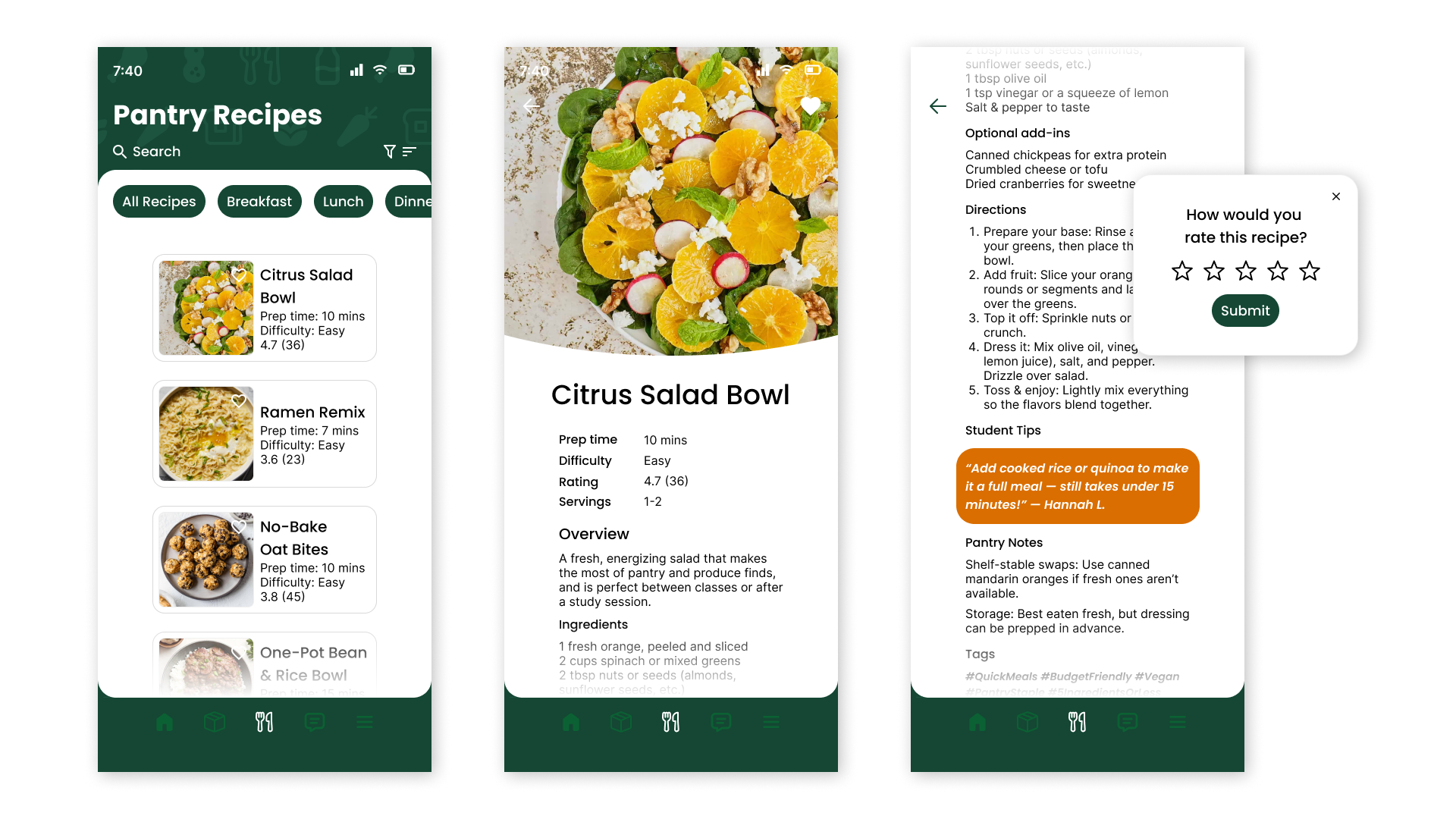
→ I included community features to make sharing feel natural
-
![]()
User Persona
-
![]()
Empathy Map
-
![]()
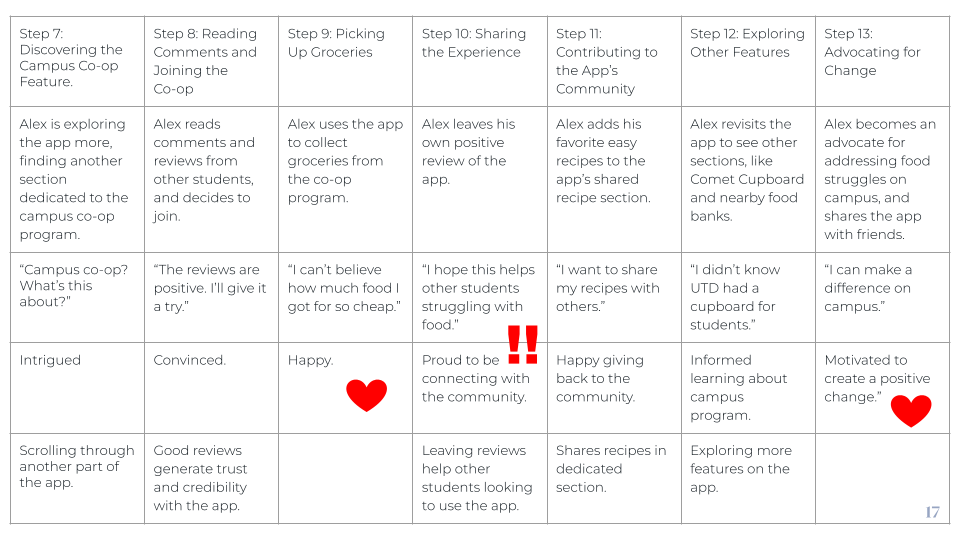
User Journey Pt. 1
-
![]()
User Journey Pt. 2
-
![]()
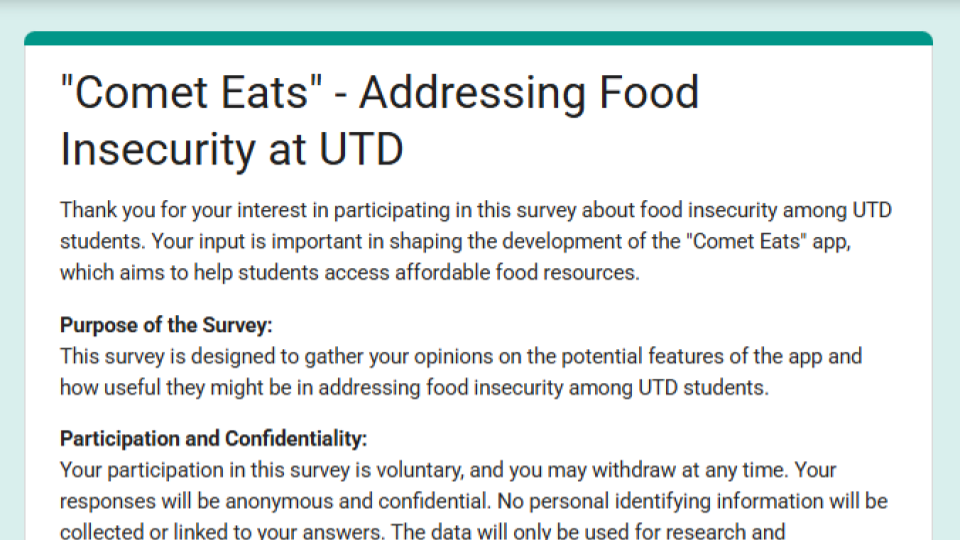
Feature Survey
-
![]()
A centralized hub for campus food resources
-
![]()
Recipe guide that gives students the confidence
-
![]()
Community features that make sharing tips feel natural
Making hidden support feel more visible
Instead of focusing on a single feature, I created a system. The solution brings together access, awareness, and community into one place so students don’t have to piece it together themselves.
Designing for access and confidence
This project solves a usability problem, and shifts how something sensitive is experienced. From moving from isolation to visibility, and from hesitation to ease, students can have better awareness when experience something so personal.
What I still want to understand
Looking back, I would want to test how this feels in real use. Does it actually reduce hesitation? Does it feel supportive instead of overwhelming? That emotional layer matters just as much as the functionality.