
Tracing Fashion Back to Its Source
Designing transparency into a system that was never meant to be seen
We say fashion is sustainable, but we can’t see how
Fashion is built on layers, fabric, labor, process, but most of it remains invisible to the people wearing it. Sustainability is often communicated through labels and marketing, but rarely through something tangible. I kept coming back to one question:
If transparency is so important, why does it still feel so abstract?
Why transparency still feels out of reach
Through my research, I realized the issue wasn’t a lack of data. It was a lack of access and clarity.
Clients don’t know how their garments are made or who makes them
Sustainability efforts feel performative rather than measurable
Technical production details exist, but are too complex to understand
Environmental impact is hidden behind simplified messaging
Even when brands try to communicate sustainability, it doesn’t translate into something meaningful for the user.
Looking at what’s missing, not what’s already built
Understanding
the Space
To ground the project, I used the AEIOU framework to observe how people interact with high fashion environments.
Activities: attending exclusive events, shopping for haute couture
Environments: creating spaces where fashion, technology, and performance intersect
Interactions: gesture-based controls, AR experiences, synchronized garments
Objects: smart clothing, virtual fittings, interactive displays
Users: affluent consumers, influencers, and brand loyalists
What stood out to me was that technology in fashion often enhances experience and spectacle, but rarely focuses on accountability or understanding.
Reframing the
Opportunity
Instead of asking how technology could make fashion more interactive, I shifted the focus:
How can technology make fashion more transparent?
With increasing adoption of IoT and blockchain in supply chains, there is a clear opportunity to surface real production data to users in a way that builds trust.
Concept
Direction
I explored different roles of IoT in fashion:
Performative: reactive garments and runway experiences
Customization: body scanning and adaptive fits
Enhanced operations: tracking production, materials, and efficiency
While performative and customization systems focused on novelty, enhanced operations revealed a deeper opportunity by providing visibility into the process itself. This became my focus.
Turning production into something you can trace
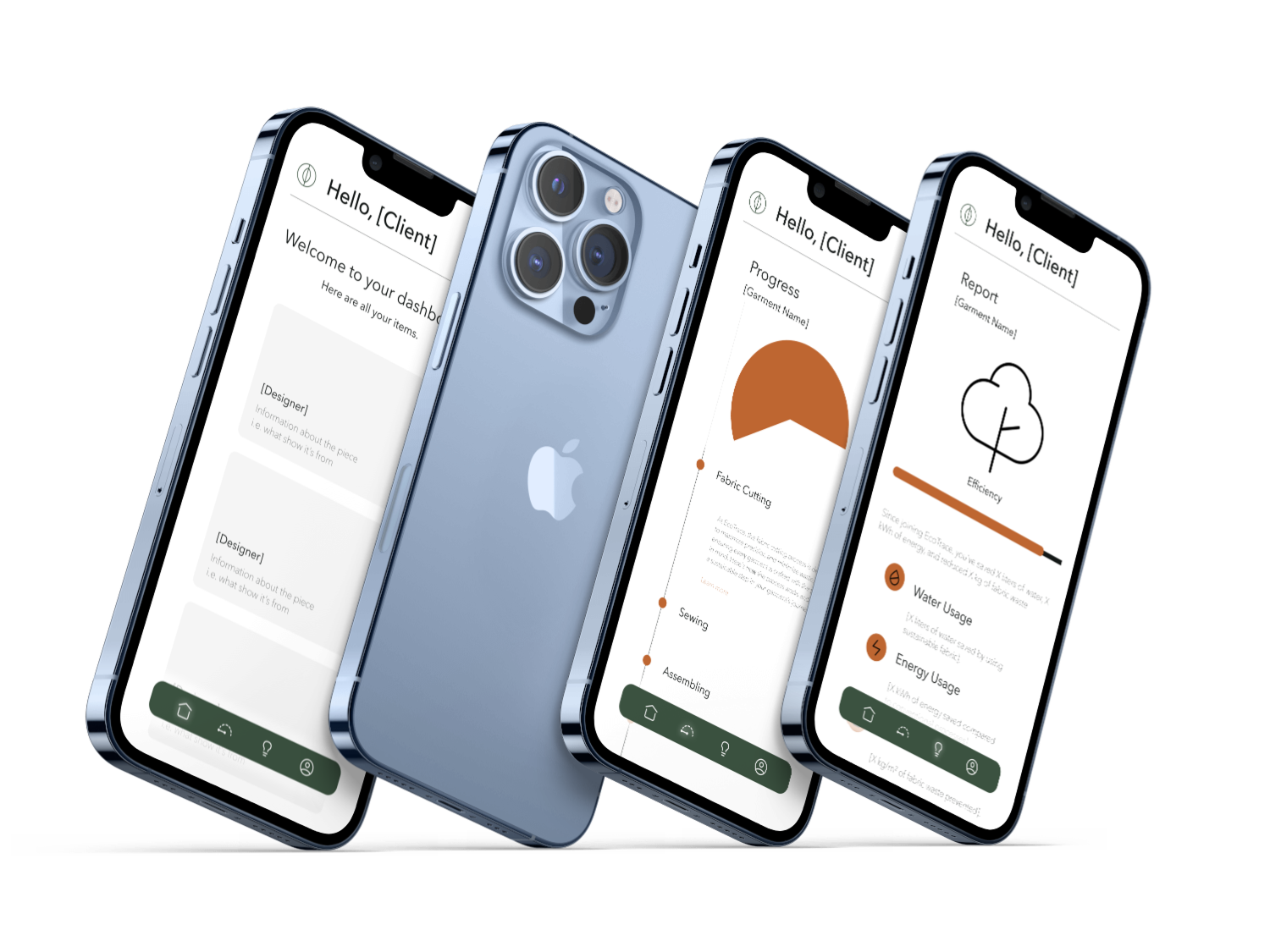
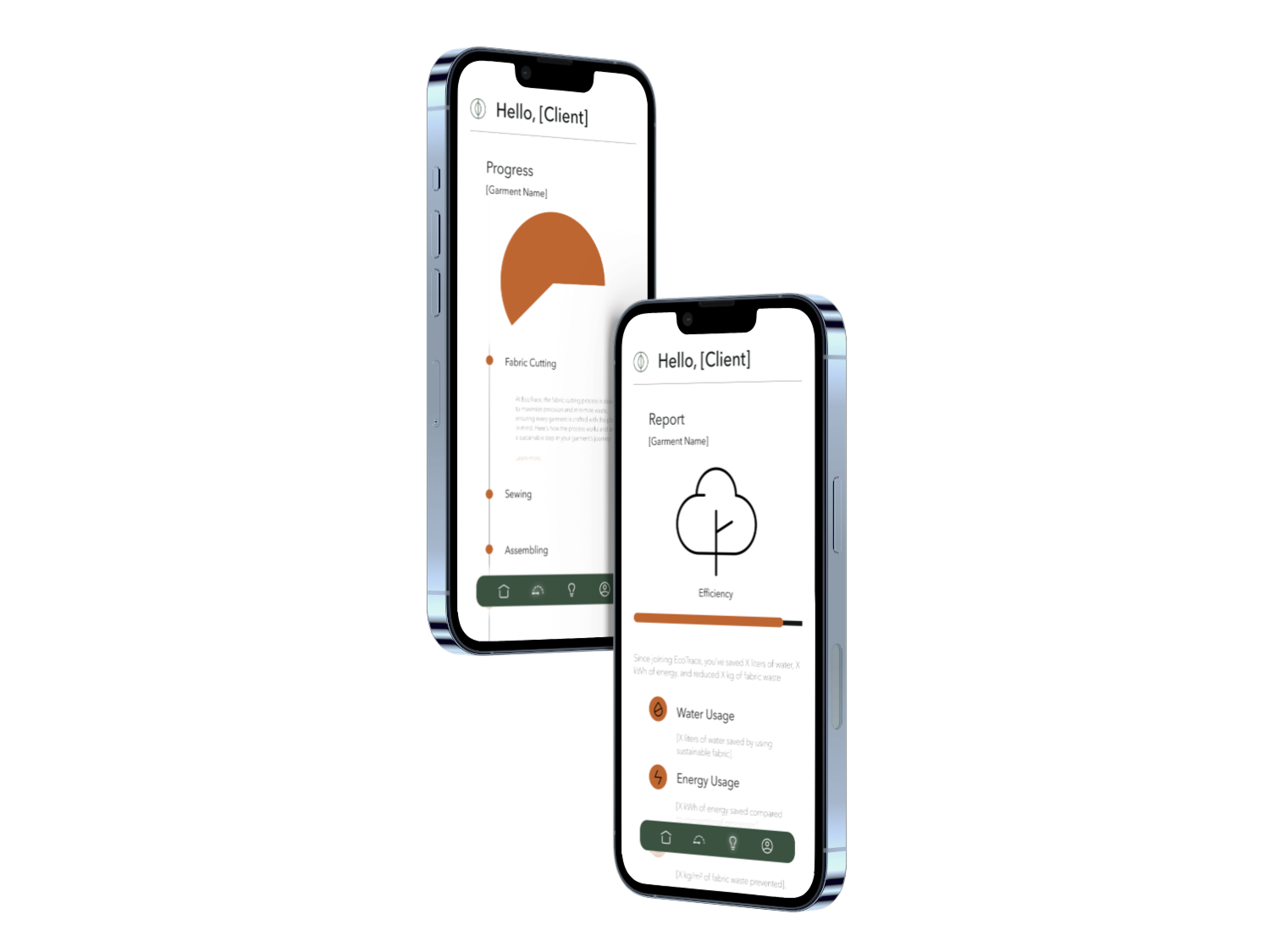
ECOTrace is a digital platform that allows users to track the lifecycle of their garment in real time from fabric cutting to final assembly.
Instead of presenting sustainability as a static label, ECOTrace turns it into something visible, measurable, and verifiable.
A timeline showing each stage of production
Real-time updates powered by IoT sensors
Blockchain-backed verification of ethical practices
Sustainability metrics like waste reduction and energy use
Dual-layer interface: simple summaries + detailed reports
The goal was not just to provide information, but to translate complexity into something people can actually understand.
The system connects physical production with digital visibility:
Sensors embedded in the production line collect data
Data is processed locally and sent to the cloud
Blockchain verifies ethical and sustainable practices
Insights are translated into user-facing dashboards
This creates a continuous loop where every stage of production becomes traceable and accountable.
How It Works
Where this could go next
This project changed how I think about design systems.
At first, I was drawn to the more expressive side of IoT, like interactive garments, reactive materials, spectacle, but as I worked through the research, I realized that the more meaningful opportunity wasn’t in making fashion more exciting, but in making it more honest.
I also learned that transparency isn’t just about access to data. It’s about how that data is communicated. Without thoughtful design, even the most accurate information can feel inaccessible.
Moving forward, I’m interested in exploring:
How much information users actually want to see
Where simplification becomes oversimplification
How this system scales across different brands and production models
Making complexity feel understandable
ECOTrace shifts sustainability from something that is claimed to something that is demonstrated.
Builds trust through verified data
Makes complex systems understandable
Encourages more informed consumer decisions
Pushes brands toward accountability
It reframes fashion from a finished product to a visible process.
A key challenge was balancing depth and accessibility.
Too much data overwhelms users
Too little reduces trust
I approached this by designing layered information:
Surface level: clear, digestible insights
Deeper level: detailed data for those who want it
This allowed the system to remain both transparent and usable.